


When I look in the mirror today, I see my own face. I see my eyes, hair, cheeks, and smile.
I imagine that most people without impairments see their own face when they look into a mirror. But I haven’t always been able to see myself clearly. I have been in recovery from severe identity issues through more than ten years of healing and therapy.
It seems that many people have suffered from some type of dysmorphia that makes us view ourselves in a way that is not a healthy version of reality. I have heard a lot about people having this difficulty with their body image, and I have also struggled with that. I’m going to talk about body dysmorphia in a future post.
Today, I want to discuss my identity dissociation. Every aspect of my physical appearance was incessantly criticized for 33 years, though I was totally standard in height and weight for the first 25 years. Every layer of my developing personality was ruthlessly picked apart and found lacking. I have never talked to anyone else who has experienced seeing their abuser’s face in the mirror instead of their own. That was a common experience for me as I began to realize the extent of the trauma I had survived and the years-long repression of my authentic self. This was not a hallucination or delusion; it was a burgeoning flicker of the recognition of a deeply worn groove in my brain. It was disorienting to my newly developing self-awareness.
Over the course of many years of childhood abuse and neglect, my needs, wants, and emotions were pushed aside, invalidated, denied, and explained away. I was made responsible for the needs and emotions of my caregivers because they were not able to take care of me. Every similarity between myself and them was begrudged, and every difference was shamed. I became so thoroughly enmeshed with another person that I was no longer able to see my own physical form clearly. When I looked in the mirror, I saw my mother’s eyes, mouth, hair, chin, and hands. There is a physical resemblance between us, and this was something that was always commented on by outside observers, but I am trying to describe more than a resemblance.
There was a blurred line in my brain between where my self ended and she began. The fantasies and lies she needed me to believe when she was unable to acknowledge harm created a cognitive dissonance that resulted in my giving up huge chunks of my authentic identity over time in order to protect myself. I had to believe what I was required to believe. I’ve heard of cult members who have the same feelings when they escape.
A lot of symptoms present themselves in adulthood when a caregiver is unable to meet the emotional needs of a child, because the child was not able to meet the appropriate developmental milestones. Re-parenting an inner child or acknowledging a shadow self generally involves targeted actions that give the wounded adult the required tools for emotional maturity they didn’t receive.
Enmeshment is likely to occur when a caregiver requires the child to meet the caregiver’s needs instead of the child being taken care of. It occurs when an emotionally immature caregiver requires external approval from everyone around them, including children.
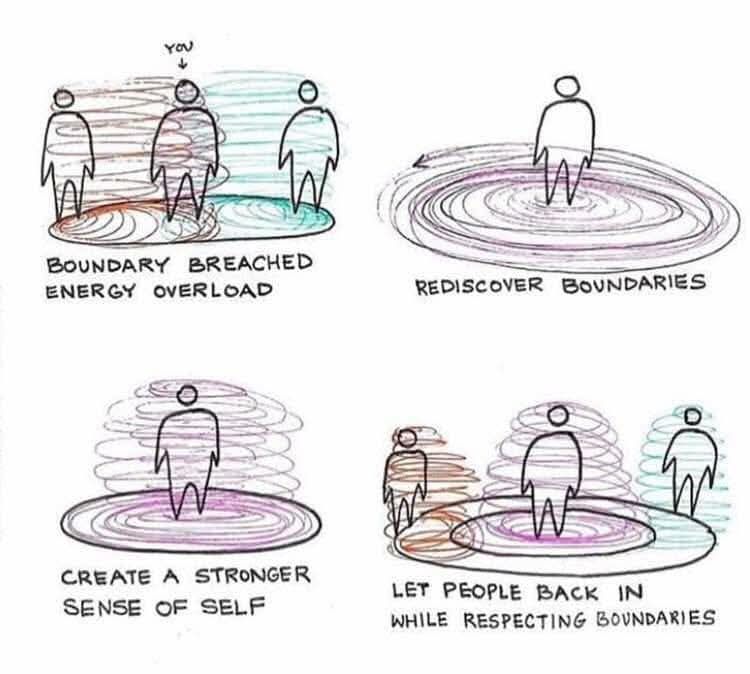
There are no boundaries in an enmeshed relationship because the caregiver sees the child as an extension of themselves, and as a mechanism to unload their own unresolved issues. The enmeshed caregiver gets to release some of their pain and tension after unloading, and the child learns that this is their sole purpose and reason for existence. The child is punished severely for doing anything beyond the control of the caregiver, so the child is further restricted and unable to express, feel, or resolve their own emotional issues. The child’s emotional needs are never met in this situation because the child does not exist as an individual.
For example, I had no idea I was considered attractive as a young adult, which in hindsight caused its own set of problems when I put myself in dangerous situations. I must have unconsciously registered pain every time a stranger insisted how much we looked alike while my abusive mother strongly objected to the obvious fact of genetics. Because she was perceived as beautiful and attractive, but was actually deeply insecure, this was one of the many ways she undervalued my appearance and worth.
As a subconscious reaction in childhood, I chose things my abusers were interested in, instead of pursuing my own interests. I was instantly and cruelly humiliated for any perceived slight anyone else made against my mother. I was always standing ready to receive the negative whispers of criticism and judgment about others that she needed to pretend were not reflecting her own self-doubts. I chose friends I was steered towards because of my her wounded inner child’s unmet need to be popular and outgoing. I ended friendships as she advised when she was not able to help me navigate resolutions to common disruptions. My mother was friends with all of my friends to control their perceptions, and stayed friends with them after advising me to end relationships for the same reason.
I was the target of attention by adult males; this was encouraged because my abuser needed their adoration and approval also. She allowed adult boyfriends to abuse me as an underage teen because she needed a variety of ways to make me feel bad about myself and keep me undervalued. she chose people who resembled me, or who had the same interests or qualifications, and compared them to me negatively when mother was upset. I became worthless, because a person with no inherent value will not buck the system. There must be no threat to the abuser’s control.
There are many other examples of how this dynamic persisted throughout my abusive childhood and into my helpless adulthood. One of the biggest ways this manifested in my adulthood was financial abuse. But that’s another blog post, too.
The blog format allows me to break up enormous layers into more manageable chunks as I relate my story, and these identity issues will be a common thread. The path towards healing started with some slow realizations that I wasn’t responsible for others’ emotions, that I wasn’t entirely to blame for the reactionary symptoms that developed, and that I was capable of making better decisions for myself than my abusers were. I started believing my truth instead of the warped versions that wounded people needed me to believe, and I stopped explaining away and excusing abuse and dysfunction.
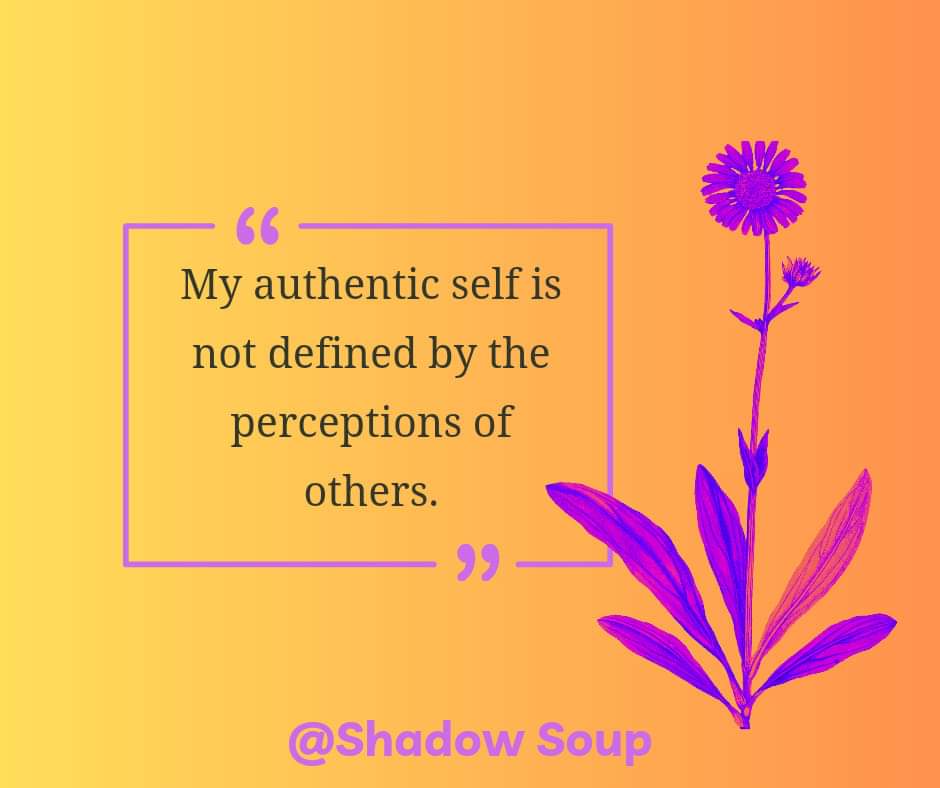
I have now spent many years processing, organizing, and reconciling what is mine and what is not mine, and seeking inwardly for my own values and self-worth. I have reclaimed a lot of things for myself and learned a lot about who I really am. Much of this page Shadow Soup is a celebration of this work.
Today, the celebration is because I can see my own beautiful, strong, authentic face when I look in the mirror.
 Shadow Soup
Leave a comment